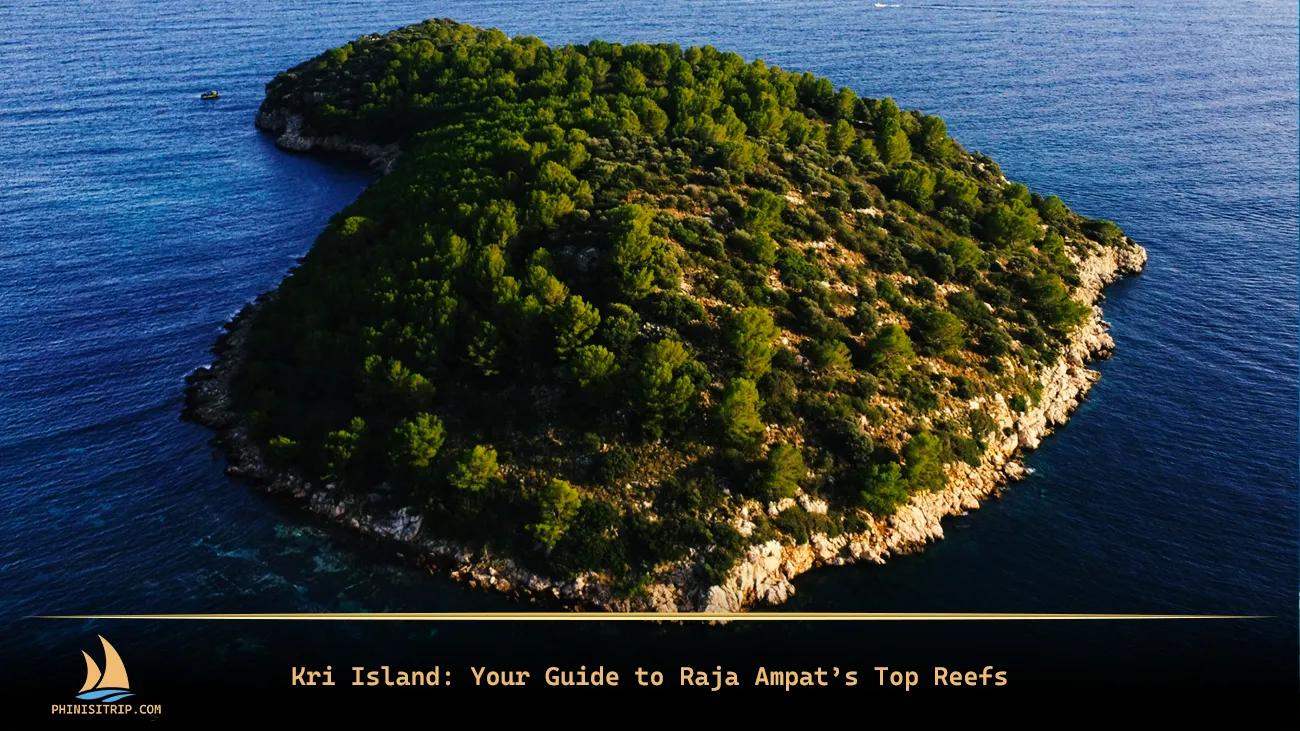
Kri Island is often described as the island that redefined what the world understood about marine biodiversity. Positioned in the heart of the Dampier Strait, this slender stretch of rainforest and white sand holds one of the most biologically intense marine ecosystems on Earth. Yet Kri is more than a diver’s haven. It is a living, evolving community navigating the delicate balance between ecological preservation, cultural continuity, and the rapid rise of responsible tourism.
Travelers come for the reefs. They stay for the landscape, the culture, the rhythm of island life, and the profound realization that Kri is both a paradise and a place fighting to preserve its soul.
| Category | Details (Expanded for Travel Planning & Ecological Context) |
|---|---|
| Island Size | 1.6 square kilometers, forming part of the Mansuar mini-archipelago. |
| Coastline Length | ~7.5 kilometers of mixed white-sand beaches, mangrove edges, and limestone pockets. |
| Villages | None on Kri itself, but closely connected to Yenbuba, Sawinggrai, and Arborek communities. |
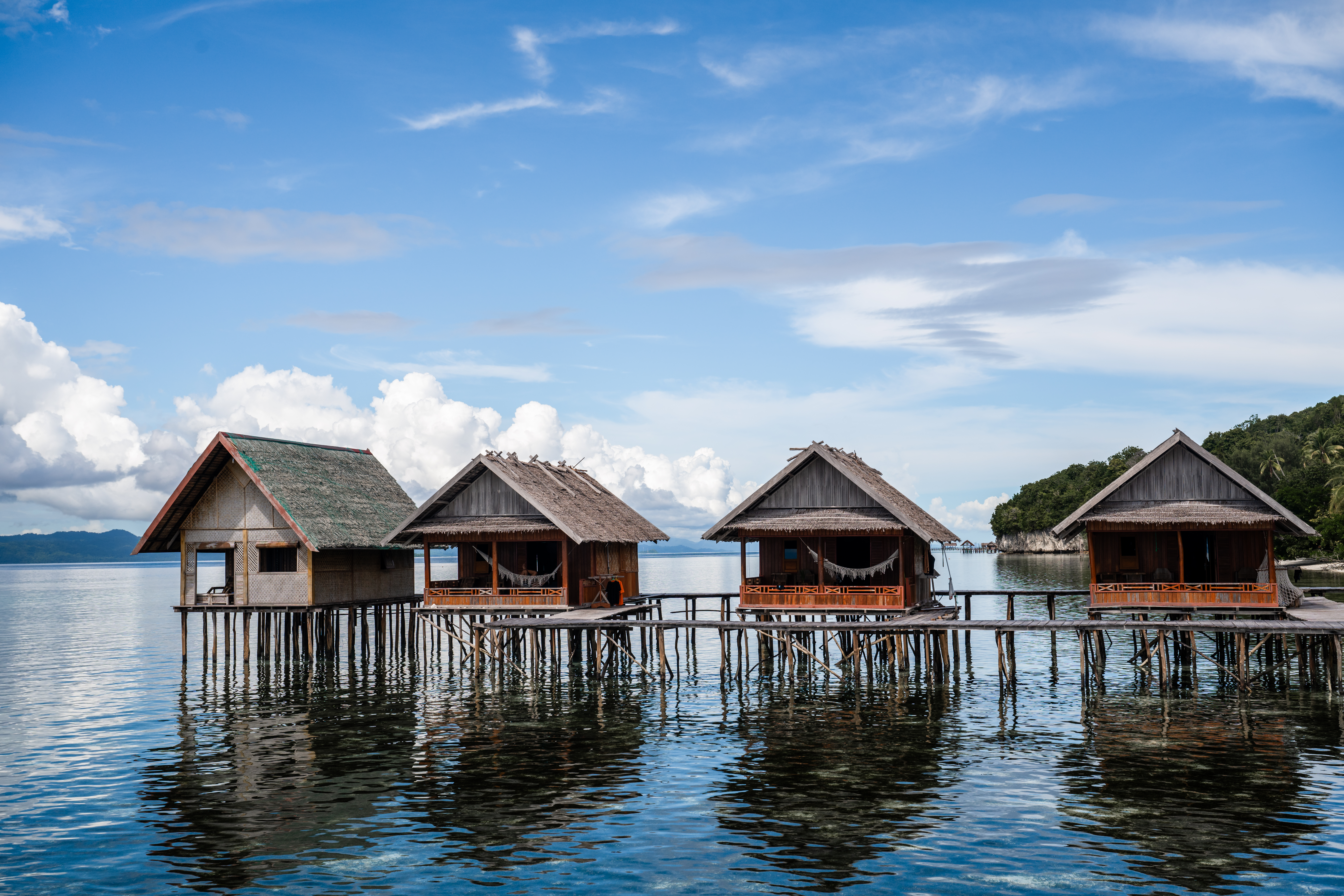
| Number of Homestays | 20+ community-owned homestays, part of the Raja Ampat Homestay Association (RAHA). |
| Eco-Resorts | Two major facilities: Sorido Bay Resort and Kri Eco Resort (Papua Diving). |
| Average Transfer from Waisai | IDR 700,000 (USD ~47) one-way by private boat; travel time ~20–30 minutes depending on tide & weather. |
| Marine Biodiversity Status | Over 374 fish species recorded at Cape Kri; among the highest biodiversity counts globally. |
| Signature Marine Life | Reef sharks, wobbegongs, turtles, manta rays (seasonal), trevallies, fusiliers, pygmy seahorses. |
| Reef Type | High-energy coral slopes, mixed bommies, current-swept pinnacles, shallow snorkeling flats. |
| Best Snorkeling Zones | Homestay jetties, Yenbuba Jetty, Sardine Reef (via boat), Chicken Reef. |
| Best Diving Zones | Cape Kri, Blue Magic, Sardine Reef, Mioskon, Chicken Reef. |
| Currents | Moderate to strong; essential to follow guide recommendations for safety and reef protection. |
| Birdlife | Red Bird of Paradise (accessible via neighbor islands), parrots, hornbills, and coastal kingfishers. |
| Phone & Internet Access | Strong signal from Mansuar tower; data speeds vary, 4G available intermittently. |
| Electricity | Mostly generator-based; some homestays now equipped with solar hybrids. Power hours may be limited. |
| Water Source | Groundwater; can be brackish. Homestays often provide freshwater for drinking. |
| Food Availability | Papuan-style meals included; seafood common. Limited availability of snacks; bring your own essentials. |
The Island That Changed Marine Science Forever
Kri’s location places it in the very center of the Dampier Strait, making it a natural peer to nearby island highlights such as Friwen Island with its wall diving and the cultural rhythms of Arborek Island, both popular extensions for travelers basing themselves around Kri.
Kri Island sits in a strategic flow of nutrient-rich currents running through the Dampier Strait. This oceanographic position fuels coral growth, fish biomass, manta aggregation, and megafauna activity unlike anywhere else in Raja Ampat.
In 2001, marine scientist Dr. Gerry Allen conducted a biodiversity survey at Cape Kri, documenting 374 fish species on a single dive, the highest ever recorded at the time. That number has since climbed, making Cape Kri a global reference point for coral reef science.
But Kri’s story extends deeper than its scientific fame. Its beaches, forests, and community life embody the soul of Raja Ampat, offering visitors a complete island experience both above and below the water.
Kri’s Cultural, Historical, and Ecological Legacy
A Name with Deep Roots
Historically known as Mansuar Kecil or “Little Mansuar,” Kri has long been part of the island networks that sustained small Papuan fishing communities.
Ancient Human Presence
The islands surrounding Kri contain archaeological evidence of human settlement dating back 30,000 to 50,000 years, making Raja Ampat one of the most enduringly inhabited maritime landscapes in Southeast Asia.
Folklore of the Four Kings
The name Raja Ampat comes from a local legend of four kings who ruled Waigeo, Salawati, Batanta, and Misool. Kri, positioned between these territories, played an important role in local movement and trade.
Wallace and Western Naturalists
During the mid-1800s, Alfred Russel Wallace documented wildlife throughout the Dampier Strait while developing theories parallel to Darwin. His legacy continues through conservation science in this region.
The Tourism Transformation
Until the 2000s, Kri relied on subsistence fishing. Over the past two decades, it has become a leading example of sustainable tourism, thanks to:
- Papua Diving (1993), pioneers of eco-tourism
- The Raja Ampat Research and Conservation Center (RARCC)
- The Raja Ampat Homestay Association (RAHA), ensuring benefits stay within Papuan communities
Today, Kri hosts over 20 community-run homestays, offering travelers immersive experiences grounded in local traditions.
Why Kri Is a Global Diving Icon
Kri’s reefs are unmatched for diversity, density, and accessibility. You can step off a homestay jetty and immediately enter a high-energy coral ecosystem.
Key Underwater Features
- Soft and hard coral gardens in pristine condition
- Manta rays (peak season October to April)
- Reef sharks, including blacktips and grey reefs
- Sea turtles grazing along the shallows
- Massive schools of fusiliers, snappers, and trevallies
- Wobbegong sharks hiding under table corals
Even snorkelers can encounter biodiversity normally reserved for dive sites elsewhere, especially when following a Raja Ampat snorkeling guide that highlights the best shallow reef zones around Kri.
Signature Dive and Snorkel Sites
- Cape Kri – record-breaking fish counts
- Sardine Reef – a swirling tornado of schooling fish
- Blue Magic – manta rays and oceanic species
- Chicken Reef – gentle drifts across coral slopes
- Yenbuba Jetty – shallow coral wonderland
Underwater, Kri is a constant show of color, movement, and evolutionary brilliance.
Forests, Beaches, and Wildlife Encounters
While diving is the headline act, Kri’s land experiences are equally captivating.
White Sand Beaches
Long beaches wrap the island, ideal for sunrise walks and sunset views. During low tide, travelers can even walk across sandbars toward Mansuar or Ransiwor islet.
Birdlife
Kri is home to:
- Red Bird of Paradise
- Wilson’s Bird of Paradise (nearby Waigeo but accessible in the region)
- Parrots, hornbills, and kingfishers
Birdwatchers often consider the island and its surroundings among the best in West Papua.
Kayaking and Paddleboarding
Hidden coves, calm bays, and mangrove channels around Mansuar and Yenbuba are ideal for serene exploration.
Local Culture
Homestays allow visitors to connect with local families, share Papuan meals, and learn about traditional fishing, sago cooking, and island life.
Comparing Kri Island to Other Raja Ampat Destinations
| Feature | Kri Island | Gam Island | Arborek | Friwen | Mansuar |
|---|---|---|---|---|---|
| Key appeal | Highest marine biodiversity | Birds of paradise, Passage | Cultural immersion | Wall snorkeling | Drift diving |
| Best for | Divers and snorkelers | Wildlife lovers | Culture travelers | Slow travelers | Balanced marine experiences |
| Marine access | Exceptional | Excellent | Very good | Excellent | Very good |
| Atmosphere | Dive focused, simple | Nature heavy | Social and cultural | Quiet | Diverse |
| Accommodation | >20 homestays + eco resorts | Homestays + select eco resorts | Homestays | Homestays | Homestays |
Kri is the marine powerhouse. Gam is the nature encyclopedia. Arborek is the cultural heart. Friwen is the pocket paradise. Mansuar is the well-rounded neighbor.
What Travelers Should Know

Kri is beautiful, but it is also real. Understanding its limitations helps visitors respect the island and its community.
Connectivity and Comfort
- Strong cell reception thanks to a tower on Mansuar
- Wi Fi availability varies and can be slow
- Groundwater may be brackish
- Occasional rat sightings require food storage awareness
Environmental Pressures
- Ocean currents carry plastic waste onto beaches
- Coral bleaching events have been recorded, especially in 2024
- Pollution from passing boats and poor wastewater management remains a threat
- A British cruise ship damaged nearby reefs in 2017
Community Dynamics
While tourism brings opportunity, it also creates challenges:
- Income distribution is uneven
- Competition for skilled jobs can cause tension
- Some traditional livelihoods have been restricted
A sustainable future depends on balancing tourism growth with local empowerment.
Conservation and Future Initiatives
Kri is at the forefront of conservation work in Raja Ampat.
Active Eco Projects
- RARCC supports education, research, and sustainable development
- Soul Initiatives (2023) transforms plastic waste into usable products
- Coralive restores damaged reefs using innovative coral propagation techniques
- Plans include hydroponic farms, mobile dental clinics, and a new glass-bottom boat
Policy and Community Systems
- Indonesian authorities increased conservation fees
- Mining is discouraged at the national level, though political tension persists
- Dive centers have an ethical agreement to prevent client stealing
- Homestay associations ensure local families remain central to tourism
The island aims to become a model for low-impact, community-led travel.
Practical Travel Guide for Visitors
Getting There
Travel typically involves:
- Fly to Sorong
- Ferry to Waisai
- Speedboat transfer to Kri
Travel time from Waisai to Kri averages 20 to 30 minutes.
Where to Stay
Accommodation ranges widely:
- Homestays: Over 20 locally owned options offering immersion and fresh Papuan meals
- Eco Resorts: Sorido Bay and Kri Eco Resort for travelers wanting comfort and sustainability combined
Ideal Travel Duration
A stay of 5 to 7 days is recommended to enjoy diving, birding, and coastal exploration.
Best Time to Visit
- Dry season (Oct–Apr): Ideal for manta rays and peak diving
- Green season (May–Sep): Quiet, lush, and excellent for snorkelers
Kri Island as the Living Classroom of the Coral Triangle
Kri Island is a place where science, culture, and nature converge.
Its reefs set global records.
Its communities shape the future of sustainable travel.
Its landscapes restore a sense of connection to wilderness.
To visit Kri is to witness what coral reefs once were, what they can still be, and what they must remain for future generations. Those wanting to explore the wider region often continue their journey aboard phinisi Raja Ampat liveaboards that access remote marine zones beyond Kri.
It is not just a destination.
It is a responsibility, a privilege, and a transformative experience.