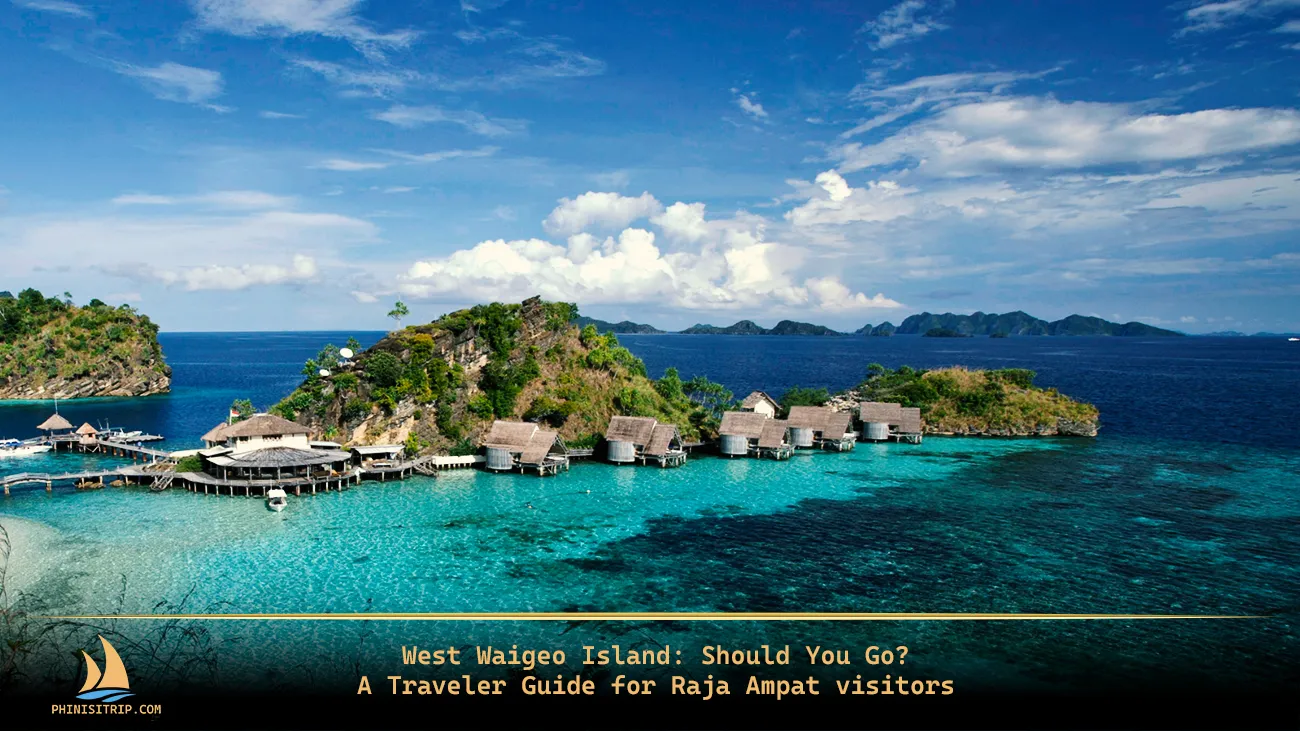
West Waigeo Island is where Raja Ampat feels vast, untamed, and quietly powerful. Far from the busier marine corridors of the Dampier Strait, this remote western edge of Waigeo offers something increasingly rare in modern travel: space, silence, and a deep sense of exploration. Dense rainforests meet winding bays, traditional villages sit beside mangrove channels, and coral reefs thrive in waters that see far fewer visitors than other parts of the archipelago.
For travelers who want to understand Raja Ampat beyond its most photographed viewpoints and famous dive sites, West Waigeo provides context. It is a place where marine ecosystems and terrestrial wilderness coexist at scale, where journeys take time, and where the rewards are earned through curiosity and patience.
This guide explores West Waigeo in depth, covering its landscapes, marine life, wildlife, culture, logistics, and its role within Raja Ampat itineraries, helping you decide whether this remote region belongs in your travel plans.
Where West Waigeo Fits Within Raja Ampat
| Category | Details |
|---|---|
| Primary Attractions | Exceptional house reefs directly in front of homestays, calm shallow lagoons ideal for snorkeling, an easily accessible inland lake, forest trails for light hiking, and relaxed village life |
| Marine Highlights | Healthy fringing reefs, large schools of reef fish, turtles, occasional reef sharks, excellent visibility for snorkeling and freediving |
| Land Experiences | Jungle walks, inland freshwater lake exploration, village paths connecting coastal areas, sunset viewpoints along the western shoreline |
| Island Size | Approximately 14 square kilometres |
| Coastline Length | Around 28 kilometres, with a mix of sandy beaches and reef-lined shores |
| Number of Villages | 4 traditional villages, each maintaining strong fishing and homestay culture |
| Homestay Association Homestays | 8 locally operated homestays, all community-run |
| Average One-Way Transfer Cost from Waisai | IDR 1,000,000 (around USD 67) |
| Average One-Way Travel Time | Approximately 1.25 hours by speedboat, depending on sea conditions |
| Nearby Islands | Kri Island, Gam Island, Arborek Island |
| Best For | Snorkelers, slow travelers, families, first-time Raja Ampat visitors seeking balance between marine life and comfort |
| Atmosphere | Calm, uncrowded, community-focused, with easy access to major Dampier Strait sites |
| Accessibility Level | Moderate. Easier logistics compared to remote southern Raja Ampat destinations |
Waigeo is the largest island in Raja Ampat, and West Waigeo represents its most remote and least developed side. While eastern Waigeo hosts Waisai, ferries, and easier access to nearby islands in Raja Ampat like Kri and Arborek, West Waigeo stretches outward into a rugged frontier of forests, bays, and long, winding coastlines.
Geographically, West Waigeo faces open seas and complex tidal systems. Its shoreline is carved by deep inlets, river mouths, and mangrove-lined channels that extend far inland. This geography shapes everything from marine life patterns to travel logistics.
West Waigeo also plays a crucial role in Raja Ampat’s ecological balance. Its forests feed nutrients into coastal waters, its mangroves protect reefs from sediment, and its relative isolation helps preserve both marine and terrestrial ecosystems.
The Landscape of West Waigeo Island
West Waigeo feels big. Unlike smaller islands that can be crossed in minutes, this region unfolds slowly. Rainforests blanket rolling hills and low mountains, broken occasionally by rivers that spill into quiet bays. The coastline alternates between rocky headlands, sandy beaches, and dense mangrove systems.
Inland, the forest is alive with sound. Insects hum, birds call, and wind moves through towering trees. Trails are few, and most exploration happens with local guides who know the terrain intimately. This sense of wilderness is one of West Waigeo’s defining characteristics.
Along the coast, beaches are often empty and unmarked. Some are accessible only by boat, others by footpaths from villages. Many travelers describe these beaches not as postcard-perfect but as deeply natural, shaped by tides rather than tourism.
Marine Ecosystems Along the West Waigeo Coast
Raja Ampat is globally recognized as the heart of the Coral Triangle, and West Waigeo contributes significantly to that reputation. Its reefs are less frequented than those near the Dampier Strait, yet they are no less diverse.
Coral Reefs and Coastal Habitats
Reefs along West Waigeo vary widely. Some areas feature shallow coral gardens near shore, while others drop into deeper reef slopes and walls. Hard corals dominate many sites, forming complex structures that shelter fish and invertebrates.
Mangrove systems play a vital role here. These mangroves act as nurseries for juvenile fish and filter sediment before it reaches reefs. The result is a resilient coastal ecosystem where reef health remains strong despite seasonal weather changes.
Fish Life and Marine Species
Fish diversity is high, though encounters tend to feel more subtle than in high-current areas. Schools of reef fish move calmly across coral heads, turtles graze in seagrass areas, and reef sharks patrol drop-offs farther offshore.
Because of lower visitor numbers, marine life often behaves naturally. Fish are less skittish, and encounters feel intimate rather than staged. For photographers and naturalists, this makes West Waigeo particularly rewarding.
Snorkeling and Diving in West Waigeo
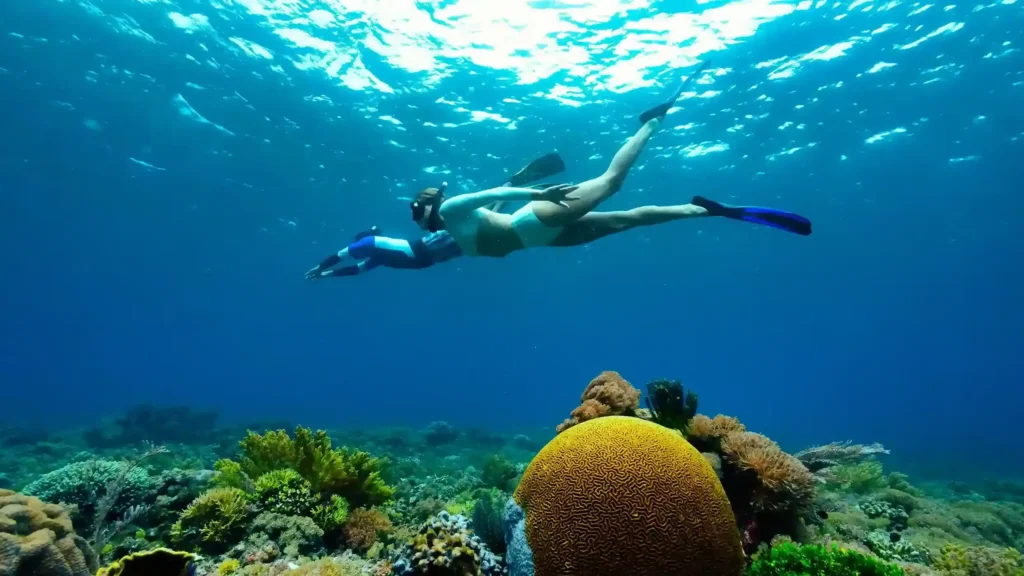
Snorkeling in West Waigeo can be exceptional, especially in sheltered bays where reefs lie close to shore. Visibility varies with tides and weather, but coral coverage and fish life remain consistently impressive.
Diving in West Waigeo is less about chasing famous site names and more about discovery. Many dive sites are unnamed, known primarily to local guides and experienced operators. These dives often focus on reef exploration, macro life, and observing ecosystem interactions.
Strong currents are less common than in the Dampier Strait, making many sites suitable for relaxed dives. However, conditions can change quickly depending on tides and weather, emphasizing the importance of local knowledge.
West Waigeo is sometimes included in longer Raja Ampat liveaboard itineraries, particularly those designed for explorers rather than first-time visitors. These routes highlight the region’s remoteness and ecological value.
For travelers interested in shallow, vibrant reefs, Mansuar offers some of the most accessible Raja Ampat snorkeling experiences directly from homestay jetties.
Wildlife and Forest Life
West Waigeo is one of the most important terrestrial wildlife areas in Raja Ampat. Its forests support a wide range of endemic species, many of which are rarely seen elsewhere.
Birdlife
Birdwatching is a major draw. West Waigeo is home to the Red Bird of Paradise and the Wilson’s Bird of Paradise, along with hornbills, parrots, kingfishers, and pigeons. Early morning excursions into the forest offer the best chances for sightings, often accompanied by local guides who understand seasonal patterns.
Mammals and Reptiles
Marsupials such as cuscus inhabit the forest canopy, while reptiles including monitors and geckos are commonly seen along forest edges. Insects and amphibians add to the region’s biodiversity, making West Waigeo a living classroom for naturalists.
Village Life and Cultural Encounters
Life in West Waigeo’s villages moves at a pace shaped by nature. Fishing, small-scale agriculture, and forest resources form the basis of livelihoods. Many villages are accessible only by boat, reinforcing a sense of separation from the outside world.
Visitors who stay in homestays experience daily life firsthand. Meals are prepared using locally sourced ingredients, often featuring fish, root vegetables, and sago. Storytelling, music, and shared meals create natural opportunities for cultural exchange.
Respect is essential. Modest dress, asking permission before photographing people, and patience with local rhythms go a long way in building trust and meaningful connections.
West Waigeo Compared to Other Raja Ampat Regions
Understanding West Waigeo becomes clearer when compared to other parts of Raja Ampat.
Misool, in the south, is known for dramatic limestone karsts and high-energy dive sites. The Dampier Strait region around Kri, Mansuar, and Arborek offers intense marine biodiversity and easier access. Gam Island blends jungle, birdlife, and iconic passages.
West Waigeo stands apart as the quiet wilderness. It offers fewer iconic viewpoints but deeper immersion. It appeals to travelers who value space, solitude, and ecological context over convenience.
Conservation and Environmental Stewardship
West Waigeo is part of Raja Ampat’s extensive network of marine protected areas and community-managed zones. Traditional practices, combined with modern conservation efforts, help regulate fishing and protect sensitive habitats.
However, challenges persist. Plastic waste carried by currents can reach even remote shores. Climate change threatens coral reefs through rising sea temperatures. Managing tourism growth without compromising ecological integrity remains an ongoing effort.
Travelers play a role in conservation by minimizing waste, respecting wildlife, and supporting locally owned accommodations and guides. West Waigeo’s future depends on maintaining this balance.
A Different Pace of Raja Ampat
One of the most striking aspects of West Waigeo is how it quietly reshapes expectations. Days are not structured around schedules, but around tides, weather, and community rhythms. Boats leave when the sea allows. Walks end when the forest thickens. Conversations stretch longer because there is nowhere else to be.
This slower pace is not an inconvenience. It is the experience itself.
In West Waigeo, silence becomes a feature, not a gap. Nights are darker, stars brighter, and mornings begin with birdsong instead of engines. For many travelers, this is the moment Raja Ampat stops feeling like a destination and starts feeling like a place.
Those who arrive with patience often leave with a deeper appreciation of how fragile and valuable these remote island systems truly are.
How to Get to West Waigeo Island
Reaching West Waigeo requires more effort than visiting eastern Waigeo, but the journey is part of the experience.
Step 1: Reach Raja Ampat
Most travelers begin with a flight to Sorong. From there, ferries connect to Waisai on eastern Waigeo, which serves as the main entry point to the archipelago.
Step 2: Travel to West Waigeo
From Waisai, travel to West Waigeo typically involves long boat journeys, often arranged by homestays or tour operators. Depending on destination and sea conditions, travel times can range from several hours to a full day.
Divers arriving by Raja Ampat liveaboards often include Mansuar as part of their Dampier Strait routes before heading further into the archipelago. For travelers seeking a more refined experience, Raja Ampat luxury cruise itineraries offer private cabins, curated dive schedules, and seamless access to Mansuar, Kri, and Arborek without relying on daily speedboat transfers.
Best Time to Visit West Waigeo
West Waigeo can be visited year round, but conditions vary.
October to April generally offers calmer seas and better access to remote bays and villages. These months are preferred for snorkeling, diving, and boat travel.
May to September can bring stronger winds and rougher seas, which may limit access to some areas. However, forest exploration and wildlife viewing remain rewarding during this period.
Rainfall is common throughout the year but typically occurs in short bursts.
Who West Waigeo Is Best For
West Waigeo is not for everyone, and that is part of its appeal.
It is best suited for:
- Experienced travelers seeking remote destinations
- Nature lovers and wildlife enthusiasts
- Birdwatchers and photographers
- Travelers interested in culture and conservation
- Those comfortable with limited infrastructure
Travelers seeking nightlife, luxury amenities, or quick access to famous dive sites may find other parts of Raja Ampat more suitable.
Why Travelers Should Go
West Waigeo offers a rare opportunity to experience Raja Ampat at its most expansive and least altered. Its forests shelter endemic wildlife, its reefs thrive quietly, and its villages preserve traditions shaped by generations of living with the sea.
For travelers who want more than highlights and checklists, West Waigeo delivers depth. It encourages slower travel, deeper observation, and a genuine connection with place.
Visiting West Waigeo is not about seeing everything. It is about understanding where you are, how ecosystems connect, and why preservation matters.
West Waigeo and Raja Ampat Liveaboards
Because of its remoteness, West Waigeo is often best explored as part of longer Raja Ampat liveaboard journeys. These voyages allow travelers to reach distant bays, reefs, and villages without repeated long transfers.
Liveaboards also help distribute visitor impact across a wider area, supporting a more sustainable approach to exploration. Days are spent diving, snorkeling, hiking, and learning, while nights anchor in quiet waters far from crowds.
Final Thoughts and Next Steps
West Waigeo Island is not a destination you stumble upon. It is a place you choose deliberately. In return, it offers an experience that feels genuine, grounded, and deeply connected to nature.
For travelers willing to invest time and curiosity, West Waigeo reveals Raja Ampat beyond its most familiar images. It shows the archipelago as a living system of forests, reefs, villages, and traditions.

To explore West Waigeo and the wider Raja Ampat region in the most seamless and responsible way, consider joining a Raja Ampat liveaboard. Discover remote routes, expert crews, and immersive journeys by booking your Raja Ampat liveaboard adventure at Phinisitrip.com.