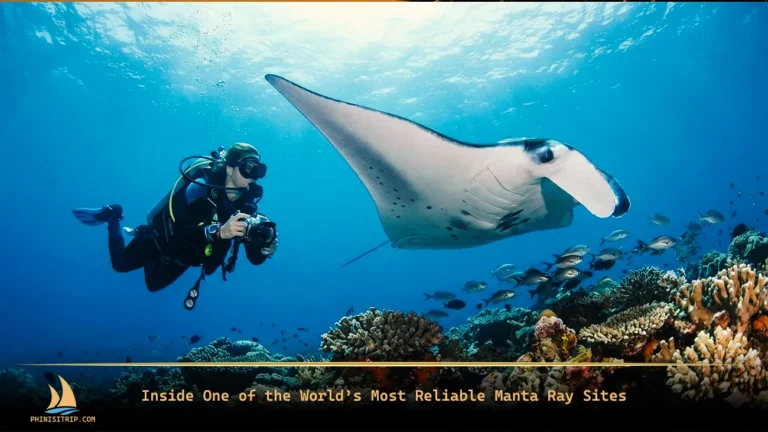
Manta Point Komodo, officially mapped as Karang Makassar, is the undisputed crown jewel of the Komodo National Park for pelagic lovers. Stretching over 2 kilometers, this submerged coral rubble ridge is legendary not just for its ripping currents, but for the graceful giants that call it home: the Reef Manta Rays (Mobula alfredi).
Whether you are logging your 100th drift dive or strapping on a snorkel mask for the first time in Indonesia, encountering a 4-meter wide manta ray hovering effortlessly in the current is an experience that redefines your connection to the ocean.
In this comprehensive guide, the Phinisi Trip dive team breaks down everything you need to know about Komodo Manta Point—from navigating the “Komodo Express” currents and the strict National Park rules, to the science behind the manta aggregations.
Quick Facts
- Location: Central Komodo National Park (East of Komodo Island).
- Local Name: Karang Makassar.
- Activity: Scuba Diving & Drift Snorkeling.
- Experience Level: Advanced (for diving due to currents); All levels (for snorkeling with a guide).
- Max Depth: 15 meters (50 feet).
- Currents: Mild to Very Strong (up to 4 knots).
- Best Time to Visit: Year-round (Peak manta season: December to March).
The Science of Karang Makassar: Why Are the Mantas Here?
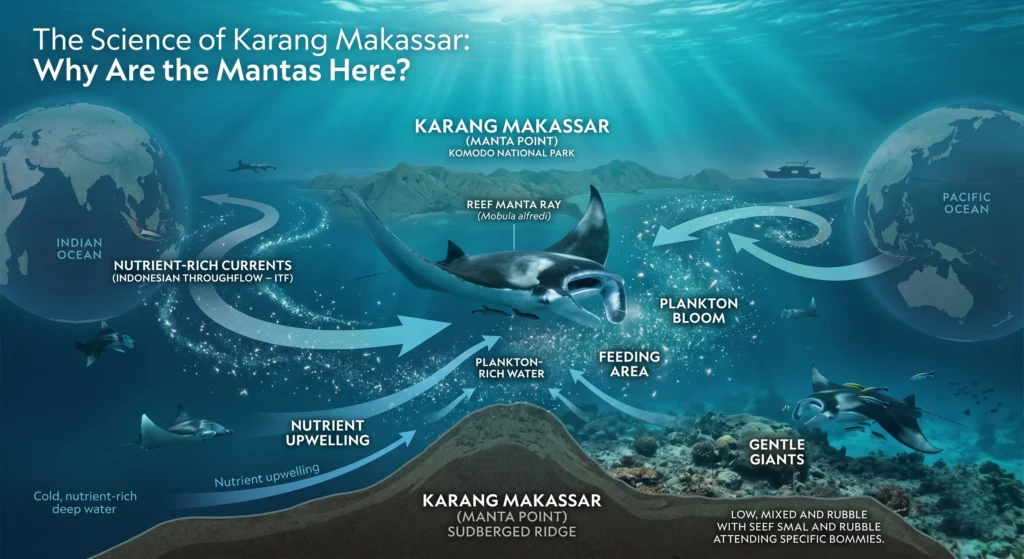
To truly appreciate “manta point komodo”, you have to understand the oceanography that makes it exist. This isn’t just a random spot where mantas happen to swim by; it is a critical habitat fueled by the Indonesian Throughflow.
1. The Nutrient Upwelling
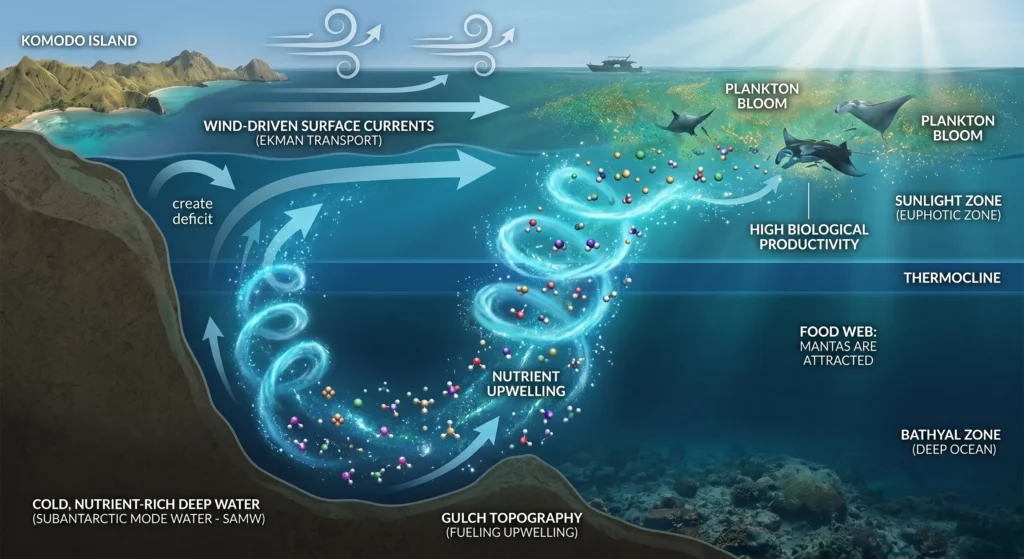
Komodo acts as a bottleneck for the massive volume of water moving from the Pacific Ocean to the Indian Ocean. When these powerful currents hit the underwater topography of Karang Makassar, it causes deep, cold water to surge toward the surface. This upwelling brings an explosion of nutrients, creating massive plankton blooms. To a manta ray, this is an all-you-can-eat buffet.
2. The Ultimate Cleaning Station

Beyond feeding, Manta Point is a vital cleaning station. The site is characterized by a shallow, seemingly barren bottom of coral rubble. However, scattered across this rubble are specific coral bommies that serve as “spas” for the mantas.
Mantas will approach these stations and hover stationary in the current, signaling their readiness. Small cleaner wrasses and butterflyfish then swim out to meticulously pick off dead skin, parasites, and even clean inside the mantas’ gills and mouths.
Phinisi Trip Divemaster Insight: If you watch closely, mantas often turn darker when hovering at a cleaning station. This color change is believed to be a signal to the cleaner fish, showing submission and making parasites easier to spot against their skin.
Scuba Diving Komodo Manta Point: Navigating the Drift
Diving here is exhilarating, but it is not a traditional reef dive. It is a true drift dive, meaning you will be moving with the water, sometimes at high speeds (fondly referred to by locals as the “Komodo Express”).
The Dive Profile & Conditions
- The Entry: Depending on the tide, the dive usually begins with a negative entry well up-current from the main cleaning stations. You’ll drop fast to avoid being swept over the site before reaching the bottom.
- The Topography: You will spend most of your dive between 10 to 15 meters (30-50 feet). The bottom is mostly crushed coral and rubble.
- Visibility: This is the paradox of Manta Point. Clear water (30m+ visibility) usually means fewer nutrients and fewer mantas. Green, plankton-rich water (10-15m visibility) often means a higher chance of encountering massive squadrons of feeding mantas.
- Water Temperature: The upwelling can bring the temperature down to 24°C – 26°C (75°F – 79°F). A 3mm full wetsuit is highly recommended.
Techniques for the Current
When the current is running, swimming against it is impossible. The strategy is to drift low to the ground. When you spot a manta at a cleaning station, you will use the rubble to seek shelter from the current.
Many divers use a reef hook here. You carefully secure the hook into dead rubble rock (never living coral!), inflate your BCD slightly, and fly like a kite in the current while watching the mantas hover effortlessly in front of you.
Komodo Manta Point Snorkeling: A Surface-Level Spectacle
You do not need to be a scuba diver to experience the magic of Karang Makassar. In fact, manta point komodo snorkeling is often just as rewarding, if not more so, because feeding mantas frequently barrel-roll right at the surface to gulp down plankton.
How Drift Snorkeling Works Here
Because of the current, boats cannot simply drop an anchor. Snorkeling here is done as a live-boat drift.
- The captain drops the snorkeling group up-current.
- You float along the surface, carried by the water flow, scanning the blue below.
- The speedboat or dinghy follows your group from a safe distance.
- Once you drift past the reef, the boat picks you up, and you can repeat the process.
Critical Safety Rules for Snorkelers
While accessible, the ocean here demands respect:
- Always wear a life jacket or buoyancy aid. Even Olympic swimmers can tire quickly in a Komodo down-current.
- Stay tight with your guide. The ocean is vast, and staying in a cluster makes it easier for the captain to track you.
- Look, but never chase. If you swim aggressively toward a feeding manta, it will dive deep and disappear. Stay calm, float quietly, and they will often approach you out of curiosity.
Essential Komodo National Park Manta Ray Rules

To protect this vulnerable species (listed as Vulnerable on the IUCN Red List) and ensure the ecosystem survives the influx of tourism, the park authority has established strict guidelines.
If you are visiting, you must memorize and follow these Komodo National Park Manta Ray rules. Dive guides and boat captains reserve the right to abort your dive or snorkel if these rules are broken.
- DO NOT TOUCH: This is the golden rule. Mantas have a protective mucus coating on their skin that prevents infections. Touching them wipes this away and causes them severe stress.
- Maintain a 3-Meter Distance: Keep a respectful distance of at least 3 meters (10 feet). Let the manta control the interaction.
- Never Block Their Path: Mantas cannot swim backward. If you position yourself directly in front of them, you force them to break their natural swimming pattern.
- Respect the Cleaning Stations: Divers must stay low and on the perimeter of the coral bommies. Never swim directly over a cleaning station, as this will immediately scare the mantas away.
- No Flash Photography or Strobes: Sudden bright flashes can blind and disorient the mantas. Turn off your camera’s flash and rely on the natural shallow sunlight.
- No Chasing or Free-Diving Down: Snorkelers must remain on the surface. Diving down aggressively toward a manta will frighten it away.
By adhering to these rules, we ensure that Manta Point remains a sanctuary for generations to come.
Lunar Cycles & Seasons: The Best Time to Visit
While Komodo is a year-round destination, your experience at Manta Point will change depending on the calendar.
The Peak Season (December to March)
During the Indonesian rainy season (the Northwest Monsoon), the water in central Komodo gets slightly cooler and heavily saturated with plankton. This is when the highest aggregations of mantas are recorded. It is not uncommon to see 10 to 20 mantas at once during these months.
The Dry Season (May to October)
This is the peak tourist season for Labuan Bajo due to perfect sailing weather. The water is warmer and generally clearer. While you might not see massive aggregations of 20 mantas, the resident population is still present, and sightings remain highly consistent.
Planning an extended trip across the Indonesian archipelago? If you are heading west after your dive, make sure to coordinate your travel dates and read up on the worst time to visit lombok so you don’t get caught in heavy monsoon transit.
Phinisi Trip Divemaster Insight: The Lunar Effect. If you want the most action, check the moon phases. The days leading up to and immediately following a Full Moon or New Moon trigger the strongest tidal exchanges. Stronger currents mean more plankton, which brings the mantas out to play. However, these are also the most challenging conditions for diving.
Getting There: Logistics from Labuan Bajo & Beyond
Karang Makassar is located in the central part of the park. It is not accessible by land, but multiple sea routes can get you there depending on your travel style.
- Daily Speedboats (from Labuan Bajo): From the port town of Labuan Bajo, a high-speed boat can reach Manta Point in about 1.5 to 2 hours. These are usually packaged as full-day snorkeling or diving trips covering Padar Island, Manta Point, and Pink Beach.
- Liveaboards (Phinisi Boats): The best way to experience Komodo is by sleeping on the ocean. Booking a liveaboard komodo 4 days excursion allows you to reach Manta Point early in the morning before the day-trip crowds arrive, offering a much more serene and exclusive encounter.
- Overland & Sea from Lombok: If you are approaching from the west, joining a komodo tour from lombok is an incredibly popular route for adventurous backpackers. A typical multi-day lombok to labuan bajo boat trip navigates through the beautiful Sumbawa archipelago and almost always includes a dedicated snorkeling stop at Komodo Manta Point before finishing the journey in Flores.
Frequently Asked Questions (FAQ)
Are the mantas at Komodo dangerous?
Not at all. The mantas found here are Reef Manta Rays (Mobula alfredi). Unlike stingrays, they do not possess a stinger or venomous barb on their tail. They are filter feeders that eat microscopic plankton and are completely harmless to humans.
Can I see Oceanic Mantas (Mobula birostris) here?
While Karang Makassar is dominated by Reef Mantas, the much larger Oceanic Mantas (which can reach up to 7 meters in width) are occasionally spotted passing through the deep channels of the park, though they rarely stop at the shallow cleaning stations.
What happens if I get swept away by the current?
Safety is paramount. All reputable dive operators in Komodo require every diver to carry a Surface Marker Buoy (SMB). If you are separated from the group, you safely ascend to the surface, deploy your SMB, and the dedicated surface cover boat will come to pick you up.
Is Manta Point family-friendly?
For snorkeling, yes, provided children are strong swimmers, wear properly fitted life jackets, and are closely supervised by adults and guides. The boat crew will assess the current on the day to ensure it is safe for family snorkeling.
Ready to drift with the giants? The Phinisi Trip crew operates daily and multi-day excursions to Karang Makassar. With our experienced local guides prioritizing your safety and the park’s ecosystem, your Komodo manta encounter awaits.