Reliability, in the context of marine wildlife observation, is not about guarantees. It’s about the convergence of physical conditions that make specific animal behaviors predictable within narrow timeframes.
Most manta ray sites operate on seasonal windows—animals pass through during migrations, following prey concentrations that shift with water temperature and current patterns. These sites deliver spectacular encounters when conditions align, then go quiet for months. In contrast, Komodo offers manta encounters year-round, as part of structured liveaboard diving tours that align with tidal timing—not seasonal speculation.
A small number of locations function differently. They serve as fixed infrastructure in manta ray territories: cleaning stations where fish remove parasites, courtship arenas where social hierarchies get negotiated, or current corridors where feeding efficiency peaks. At these sites, the biological need overrides seasonal movement.
What “Reliable” Actually Means in Manta Ray Encounters
The animals return not because they’re migrating through, but because the location solves a persistent problem. Manta Point, positioned in the western channel of Komodo National Park, is one of these functional sites. It’s reliable because it addresses a constant need—parasite removal—in a location that sits directly in the path of mantas feeding in surrounding waters.
The site doesn’t depend on annual migrations. It depends on tidal cycles that repeat twice daily, every day, all year. This is what separates genuinely reliable manta sites from seasonal aggregation zones. The difference isn’t marketing. It’s biology.
Why This Site Works: Physical and Biological Mechanics
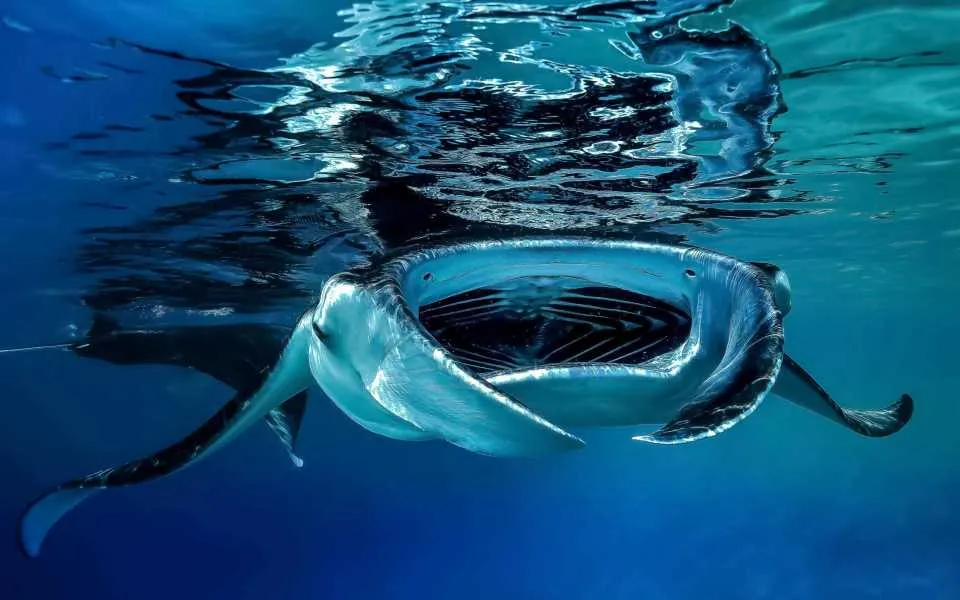
The reef at Manta Point rises from approximately fifteen meters to within two meters of the surface, forming a plateau in a channel where tidal currents accelerate between Komodo Island and several smaller islets. When water moves through this channel, it hits the reef and creates turbulence that forces zooplankton upward into the water column while simultaneously slowing flow velocity directly over the plateau.
This combination—plankton concentration and reduced current—makes the site productive for both filter feeders and the small fish that feed on material stirred from the reef. Cleaner wrasse and juvenile butterflyfish establish territories on this plateau because the current brings them a steady supply of food particles while the reef structure provides shelter.
They’ve also learned that large animals hover here regularly, and those animals carry parasites worth eating. The cleaners don’t leave because the conditions that support them are constant.
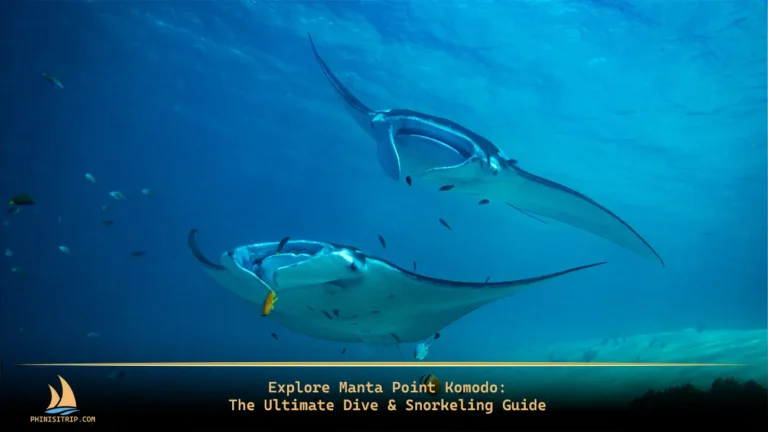
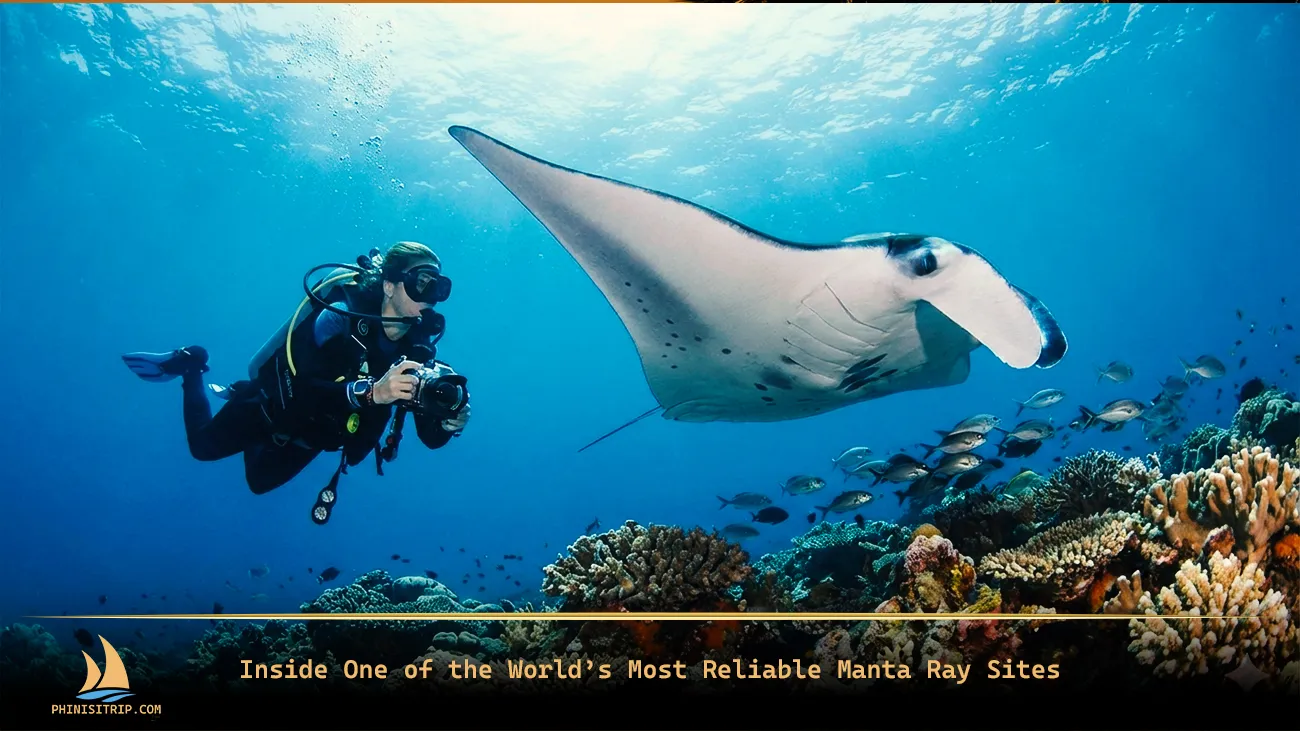
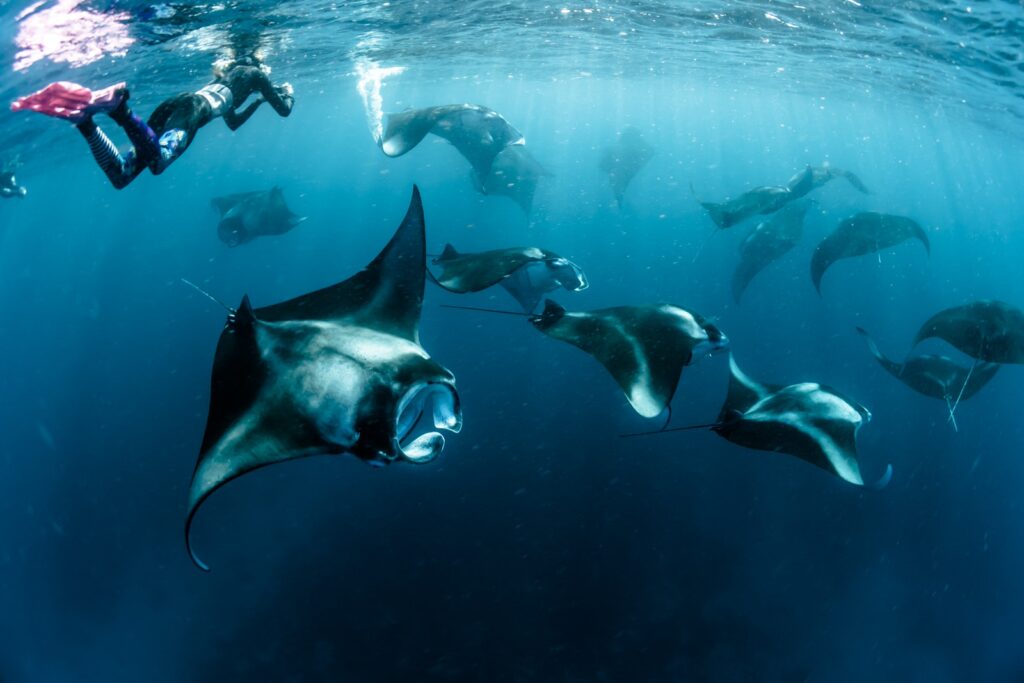
Watch a manta approach the cleaning station during peak tidal flow. The animal orients into the current, adjusts its pectoral fins to maintain position, and hovers motionless while cleaner wrasse work across its ventral surface. The interaction lasts anywhere from three to twenty minutes. Sometimes the manta circles and returns for a second pass. The behavior is not random. It’s transactional.
The biological transaction
Manta rays (Mobula alfredi) feeding in deeper water around the channel accumulate parasitic copepods on their skin and gill plates. These parasites reduce swimming efficiency and increase infection risk. The mantas know the cleaning station exists at specific GPS coordinates, and they return to it between feeding passes.
The timing is tidal: mantas appear when current is strong enough to make hovering effortless but not so strong that it sweeps the cleaners away. This creates two four-hour windows per day when encounters are most likely. Outside those windows, the site may be empty.
Why geography matters as much as biology
Komodo sits at the intersection of the Flores Sea and the Indian Ocean. Water mixing here is nutrient-dense, which supports the plankton blooms that draw mantas to feed nearby in the first place. The cleaning station doesn’t exist in isolation—it’s positioned in a feeding territory that mantas already use daily.
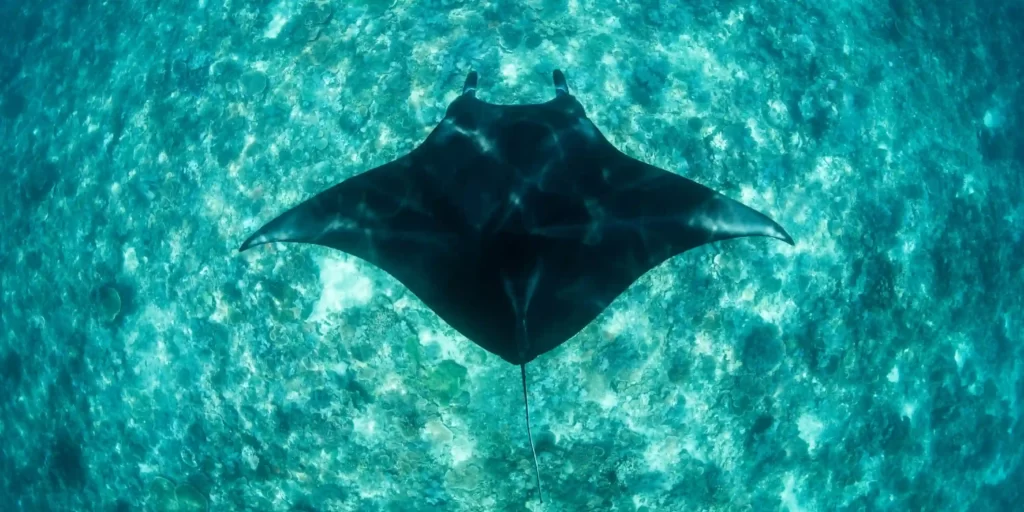
The reef itself is unremarkable. Coral cover is moderate, structure is low-relief, and biodiversity is typical for Komodo’s current-exposed sites. What makes it significant is the behavior it hosts, not the habitat it provides.
What Makes This Site Different From Other Manta Locations
1. Year-Round Functionality Independent of Migration
Most famous manta sites rely on seasonal aggregations. Manta Point operates as a service station in established territories, and is frequently featured in Komodo liveaboard diving tours, thanks to its consistent encounter rates.
Individual mantas use it repeatedly across years, not just during migration windows. Photographic identification studies show the same animals returning to this reef across multiple seasons, which indicates residency rather than transience.
Shallow Depth Accessible to Snorkelers and Novice Divers
The cleaning station sits between five and twelve meters deep.
Surface observation is often superior to diving because mantas orient vertically during cleaning, making them more visible from above. This accessibility means the site accommodates a broader range of visitors without sacrificing encounter quality, but it also increases pressure from poorly managed groups.
Tidal Predictability Rather Than Seasonal Guesswork
Operators can predict manta presence based on tide charts, not moon phases or seasonal patterns. This doesn’t guarantee encounters, but it narrows the probability window to specific hours each day. Compare this to seasonal sites where you might visit during the “right” month and still miss animals because they arrived two weeks earlier than historical averages.
Current-Assisted Observation Without Drift Diving
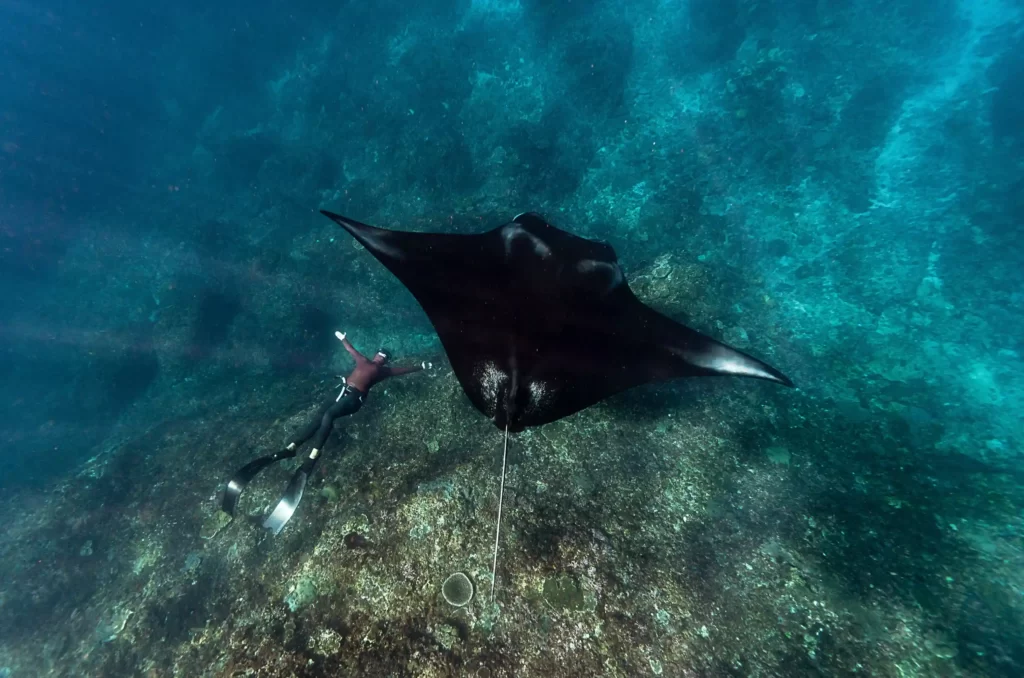
Strong current keeps mantas stationary while being cleaned, which gives observers extended viewing time without chasing animals. The mantas face into the current, hover, and stay put. You position yourself downstream and watch. No pursuit, no harassment, just observation of animals engaged in behavior they’d perform whether humans were present or not.
Dual-Use Site: Feeding Adjacent to Cleaning
The channel surrounding Manta Point is a feeding corridor.
Mantas often arrive at the cleaning station immediately after feeding passes in deeper water sometimes coming straight from popular Komodo snorkeling spots like Gili Lawa or Pink Beach, which means they’re already in the area and simply diverting to the reef. Sites where cleaning stations sit far from feeding zones see lower utilization because the detour cost is higher.
Minimal Structural Variability Over Time
Coral bleaching and storm damage alter reef structure at many dive sites, which can disrupt cleaning station dynamics. Manta Point’s plateau is primarily rocky substrate with modest coral coverage. The physical structure that creates current patterns hasn’t changed significantly in decades, which means the hydrodynamic conditions that make it useful for mantas remain stable.
Enforcement of Interaction Rules
Komodo National Park enforces stricter distance and behavior protocols than most comparable sites.
Rangers conduct spot checks, guides brief guests thoroughly, and fines for violations are imposed. This reduces the abandonment risk that has closed cleaning stations elsewhere. The animals tolerate human presence because that presence is managed.
Manta Ray Site Reliability Comparison
| Site | Sighting Consistency | Seasonal Dependency | Crowd Pressure | Observation Quality | Human Interference |
|---|---|---|---|---|---|
| Manta Point (Komodo) | 8/10 year-round | Low – tidal patterns matter more | High during dry season | Excellent – shallow, clear, long encounters | Moderate – enforced rules |
| Nusa Penida (Bali) | 7/10 Apr–Oct, 3/10 other months | High – oceanic mantas follow plankton | Very high – proximity to Bali | Variable – surge and visibility fluctuate | High – inconsistent enforcement |
| Manta Sandy (Raja Ampat) | 8/10 year-round | Low – resident population | Low – remote location | Excellent – pristine visibility | Low – small visitor numbers |
| Hanifaru Bay (Maldives) | 9/10 May–Nov, 1/10 other months | Very high – monsoon plankton | Moderate – permit-limited | Exceptional peak, crowded | Moderate – strict but high density |
| Revillagigedo (Mexico) | 6/10 Nov–May, 0/10 other months | Very high – migratory oceanic | Low – liveaboard-only | Excellent – blue water, large animals | Low – experienced divers only |
When Encounters Actually Happen: Honest Timing Analysis
The common narrative is that manta sightings at Manta Point are “guaranteed.” This is marketing language that obscures the actual mechanics. Here’s what timing looks like when you remove the sales pitch.
Tidal windows
Mantas appear most frequently during mid-incoming and mid-outgoing tides, when current velocity is strong but stable. During slack tide, they often leave the cleaning station entirely because the effort-to-benefit ratio drops—they’d need to actively swim to maintain position, which negates the advantage of the current-assisted hover.
Peak activity typically occurs 90 minutes before and after tidal change, though this shifts based on moon phase and seasonal current strength. Guides experienced with the site plan arrivals to coincide with these windows, but this is site knowledge that most online resources don’t mention.
Time of day
Early morning (6:00–8:00 AM) and late afternoon (4:00–6:00 PM) see higher manta presence, correlating with feeding behavior in adjacent waters. Mid-day sightings occur but are less predictable.
This is relevant for day trip planning: boats that arrive at 10:00 AM are often outside optimal windows, regardless of tidal conditions. Travelers planning 3-day Komodo itineraries or komodo cruise 4 days can better sync their timing, as guides plan for tidal flow windows and optimal encounter hours.
Seasonal nuance
The site is diveable year-round, but conditions and manta behavior vary. During the southeast monsoon (April–November), visibility is better and seas are calmer, but plankton is less concentrated. Mantas still visit, but they spend less time at the station because there’s less biological activity in the water column.
During the northwest monsoon (December–March), visibility drops and seas roughen, but plankton blooms intensify. Mantas linger longer because surrounding waters are more productive. You’re choosing between comfortable conditions with brief encounters or challenging conditions with extended observation time.
What online sources get wrong
Many articles cite “best time to see mantas” as April through November without explaining that this reflects tourist comfort, not manta density. Others claim moon phase is irrelevant, which ignores the fact that spring tides create stronger currents that affect both plankton distribution and manta hovering efficiency.
The most persistent error is treating all daylight hours as equally productive, when real observation data shows clear morning and evening peaks. This misinformation stems from content written by people who haven’t spent time with guides who dive the site daily.
What Most Articles Get Wrong About This Site
The “guaranteed sightings” myth
No wildlife encounter is guaranteed. Mantas are wild animals responding to environmental cues humans can measure but not control. A site can be highly reliable without being certain. Framing reliability as a guarantee creates false expectations and leads to poor decision-making—day-trippers who arrive during sub-optimal tidal phases then conclude the site is overrated.
Treating all manta behavior as identical
Not all manta appearances are equal. An animal that spends thirty seconds passing through the site isn’t the same encounter as one that hovers at the cleaning station for fifteen minutes. Articles that count any manta sighting as equivalent miss this distinction. The quality of the encounter depends on whether you arrive when mantas are actively seeking cleaning versus when they’re transiting through the area.
Ignoring current as a risk factor
The same currents that make the site reliable for mantas make it hazardous for inexperienced divers. Downcurrents on the reef’s southern edge have pulled panicked divers below twenty meters. Surface drift can separate snorkelers from boats within minutes. These risks are real, documented, and frequently downplayed in promotional content that prioritizes booking conversions over safety disclosure.
A dive guide briefs a group before entry: “If you feel yourself being pulled down, swim across the current, not against it. If you surface away from the group, deploy your SMB immediately.” Half the group is taking photos. Two people are adjusting fins. No one writes anything down. This briefing could save someone’s life, but it’s delivered the same way every time because most guests don’t understand that the warning is not theoretical.
Overstating coral and biodiversity
Manta Point is not a premier reef site. Coral coverage is modest, fish diversity is average, and the underwater landscape is visually unremarkable. The site is famous for one thing: consistent manta encounters. Articles that describe it as a biodiversity hotspot or pristine coral reef are either outdated or written by people who haven’t been there.
This matters because it sets expectations. You go to Manta Point for mantas, not for reef scenery. If you want exceptional coral formations and fish diversity, consider diving hotspots around Komodo that are more scenic but less behaviorally specialized.
Misrepresenting seasonality
The phrase “year-round diving” gets repeated without acknowledging that December through March involves significantly rougher sea conditions and frequent day trip cancellations. Liveaboards operate during wet season, but day boats often don’t. Suggesting that all twelve months offer equivalent access is misleading for travelers planning single-day visits.
Ethical Observation and the Problem With “Guaranteed” Language
When operators market guaranteed sightings, they create pressure to deliver that promise regardless of conditions. This leads to guides violating distance protocols, boats crowding mooring buoys beyond capacity, and divers chasing animals to manufacture encounters. The behavior degrades the site over time.
Cleaning stations are not resilient to harassment. Studies from other locations show that mantas abandon cleaning stations when disturbance exceeds tolerance thresholds. The abandonment is often permanent—the animals don’t return even after years of reduced pressure. Manta Point has avoided this outcome so far because park enforcement exists, but enforcement quality varies with ranger staffing and political will.
The language we use matters
Calling encounters “reliable” acknowledges probability. Calling them “guaranteed” creates obligation. One supports sustainable observation; the other incentivizes behavior that erodes the conditions making the site valuable in the first place.

The language we use matters
Calling encounters “reliable” acknowledges probability. Calling them “guaranteed” creates obligation. One supports sustainable observation; the other incentivizes behavior that erodes the conditions making the site valuable in the first place.
How diver behavior affects manta presence
Diver behavior has measurable impact. Mantas that are chased or touched spend less time at cleaning stations and exhibit stress indicators—increased gill ventilation, abrupt departures, avoidance of areas where harassment occurred. The cumulative effect of hundreds of daily visitors, even if each individual interaction is minor, shapes whether the site remains functional or degrades.
Komodo National Park enforces a three-meter minimum distance between humans and manta rays. You do not approach mantas. They approach you. If a manta swims toward you, you hold position or back away slowly. Chasing or cornering mantas results in fines and potential expulsion from the park.
These rules exist because cleaning stations are critical to manta health, and harassed mantas abandon them permanently. This has already occurred at sites in Thailand and the Philippines where enforcement was lax. Komodo’s management is stricter than most Indonesian dive destinations, and guides will intervene immediately if you violate protocols.
ECOSYSTEM
Why This Site Matters Beyond Tourism
Manta Point isn’t significant because it’s scenic or accessible. It’s significant because it demonstrates how physical geography and animal behavior intersect to create predictable wildlife encounters. The site is a living case study in why certain locations develop ecological importance independent of human designation.
Most people experience nature as randomness punctuated by luck. You go to a place hoping to see an animal, and sometimes it works out. But places like Manta Point operate on legible patterns. The currents are tidal. The geography is fixed. The biological need for parasite removal is constant. When you understand the mechanics, the encounters stop feeling like fortune and start revealing themselves as consequences of systems that existed long before humans arrived to watch.
The question isn’t whether Manta Point is “worth it”—a framing that treats nature as a product to be consumed. The question is whether you’re capable of observing without demanding. The site doesn’t owe you anything. The animals don’t perform on schedule.
What it offers is a window into behavior that happens whether you’re there or not. That’s not a guarantee. That’s something more valuable: a glimpse of how these animals actually live when we’re not the center of the story.