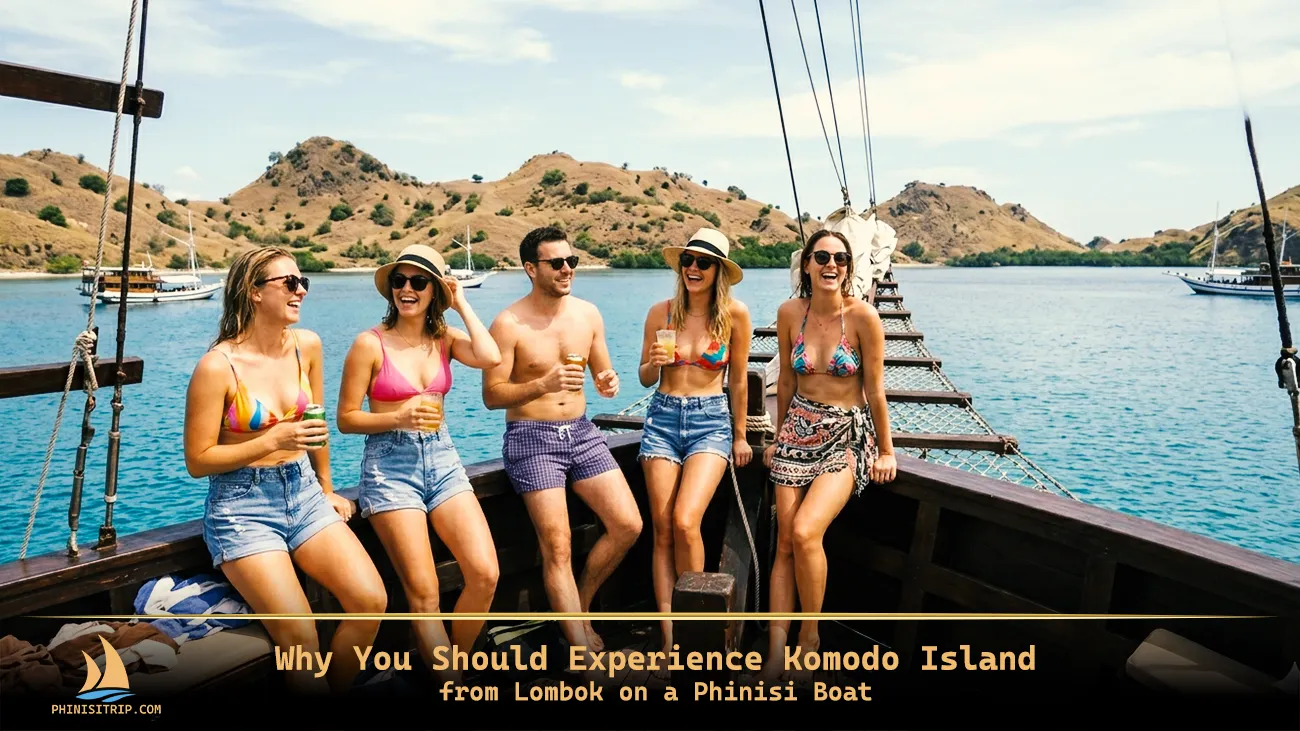
Most travelers still fly into Bali, take a connecting flight to Labuan Bajo, and board a crowded boat at the main marina. But a growing number of international travelers are choosing a smarter, more rewarding route: sailing from Lombok to Komodo Island on a traditional Phinisi boat. This guide explains exactly why that choice is worth making.
The Rising Demand for Komodo Island Trips Starting from Lombok
Komodo Island has been on the international radar since the Komodo National Park gained UNESCO World Heritage status in 1991. But the way travelers want to experience it has changed significantly over the past five years.
Post-pandemic, travelers aged 19 to 35 are actively seeking alternatives to high-traffic tourist corridors. Bali has become synonymous with crowds. Labuan Bajo, the traditional gateway for Komodo trips, has grown congested with speedboat operators and day-trippers who spend four hours on the water and call it a Komodo experience.
Lombok, located directly east of Bali, is now being recognized as a superior departure point. It sits closer to the Komodo archipelago, offers a calmer local atmosphere, and provides natural access to some of Indonesia’s most spectacular open-water sailing corridors. Booking data from Indonesian tour operators consistently shows that Lombok-to-Komodo Phinisi trips are among the fastest-growing categories in the country’s adventure travel sector.
The shift is also driven by awareness of the Phinisi boat itself. This traditional wooden sailing vessel, built by the Bugis and Konjo people of South Sulawesi, was added to UNESCO’s Intangible Cultural Heritage list in 2017. Travelers who know what a Phinisi is are choosing it specifically because it offers a depth of experience that no speedboat or standard liveaboard can replicate.
Why Lombok Is the Best Starting Point to Explore Komodo Island
Shorter Sailing Routes and Better Sea Conditions
Lombok sits roughly 200 kilometers closer to Komodo Island than Bali does. When you sail from Bali, you cross the challenging Lombok Strait and spend a significant portion of your trip just reaching the archipelago. Departing from Lombok cuts that transit time meaningfully, giving you more hours at the actual destinations that matter: Pink Beach, Padar Island, and Komodo’s interior ranger trails.
The sailing corridor from Lombok through the Sape Strait and into the Komodo National Park area also benefits from more predictable seasonal wind patterns during the dry season. For a Phinisi boat, which is designed to work with natural wind and ocean conditions, this matters. You get smoother passages and more comfortable nights at anchor.
Less Crowded, More Authentic Experience
Lombok has deliberately avoided the mass-tourism infrastructure that defines Bali and, increasingly, Labuan Bajo. The harbor departure points are quieter. The support services are more personalized. And because fewer operators run Lombok-to-Komodo routes compared to the Bali-to-Labuan Bajo corridor, your sailing experience feels exclusive rather than factory-produced.
This matters especially if you are traveling as a couple or in a small private group. A Phinisi charter departing from Lombok gives you access to the same national park waters without the noise and congestion that comes from boats departing en masse from Labuan Bajo’s main port.
Ideal for Multi-Day Island Hopping
The Lombok-to-Komodo sailing route naturally passes through or alongside some of the most beautiful island groups in Eastern Indonesia. The Gili Islands, the waters around Sumbawa, and the transitional marine zone approaching the national park all sit along this corridor.
A multi-day Phinisi trip from Lombok allows you to turn what most visitors treat as a destination into a genuine journey. Each day brings a different anchorage, a different reef, and a different coastline. That is an itinerary no Labuan Bajo day-trip operator can offer.
What Makes a Phinisi Boat the Ultimate Way to Visit Komodo Island
Traditional Craftsmanship with Modern Comfort
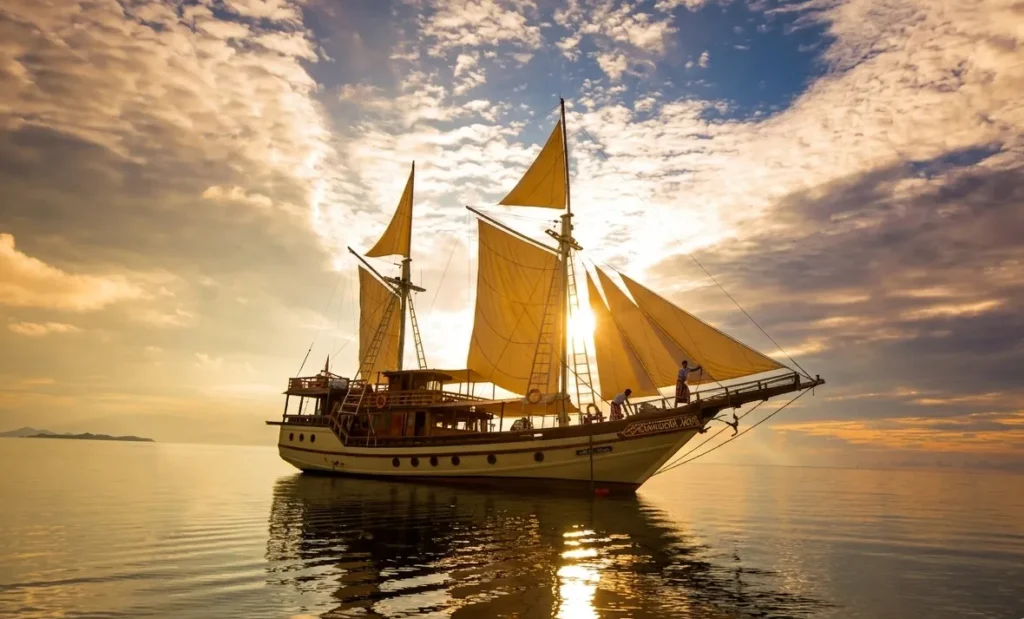
A Phinisi is not a rustic fishing boat repurposed for tourists. It is a purpose-built vessel with centuries of open-sea design behind it. The hull is constructed from ironwood or teak using traditional hand-cutting techniques passed down through generations of Bugis shipbuilders. Modern Phinisi boats built for tourism layover those construction principles onto fully equipped interiors: air-conditioned private cabins, clean bathrooms with hot showers, and dining areas serving freshly prepared Indonesian and Western food.
Vessels like the Mosalaki Phinisi are a prime example: traditional twin-mast construction on the outside, air-conditioned cabins and full dining service on the inside. The result is a boat that looks extraordinary from the outside and feels genuinely comfortable from the inside. You are sleeping on the ocean, anchored next to a reef or a deserted coastline, without sacrificing the basics of a good night’s sleep.
Designed for Long-Distance Open-Sea Sailing
Phinisi boats were originally built for inter-island cargo trade across the Indonesian archipelago, one of the most challenging sailing environments in the world. The deep draft, reinforced hull, and high freeboard make them stable in ocean swells that would make smaller vessels uncomfortable.
Boats like the Em’Ocean Phinisi, a classic two-mast vessel purpose-built for Komodo waters, demonstrate exactly this capability. For a multi-day crossing from Lombok to Komodo Island, this matters more than most travelers realize. Open-water passages in this part of Indonesia can involve real swells, particularly in the channels between islands. A Phinisi handles those conditions with a level of stability that speedboats and smaller liveaboards simply cannot match.
Private Cabins, Open Decks, and Full Crew Service
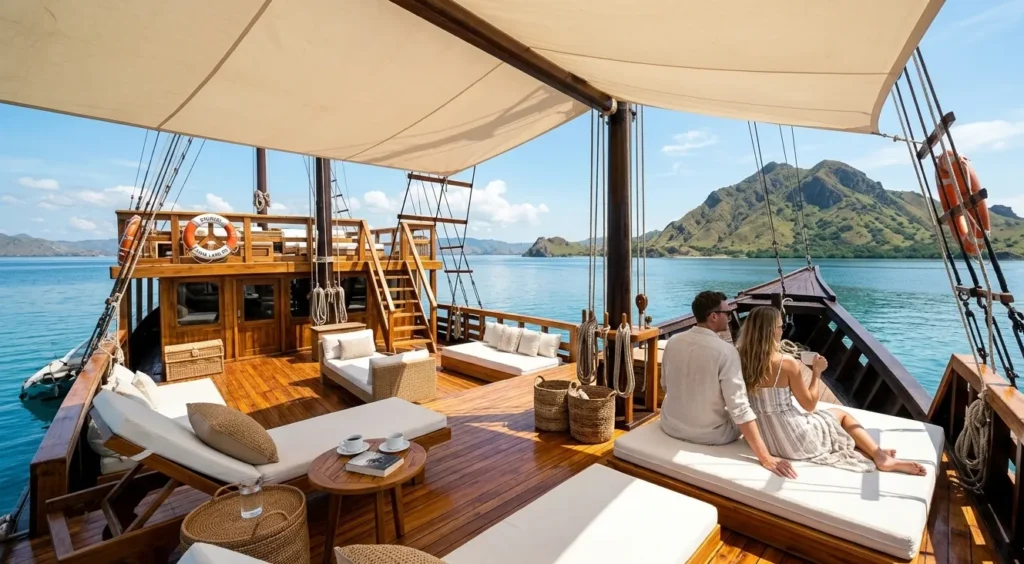
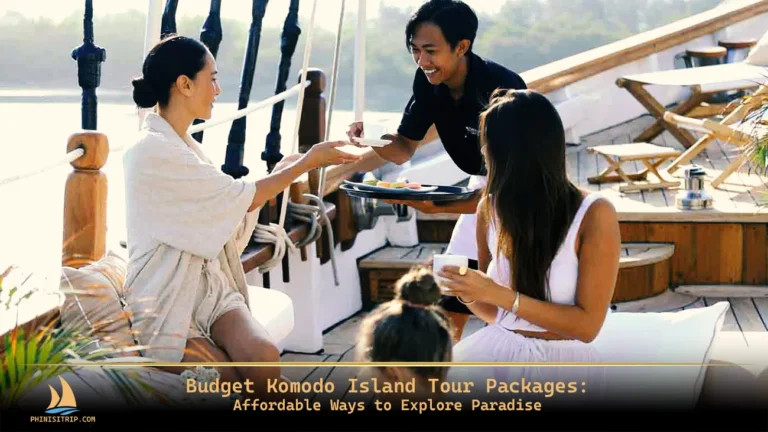
A standard Phinisi charter for tourism comes fully crewed. That means a captain, a first mate, a cook, and deck crew who handle all navigation, anchoring, snorkeling equipment setup, and daily operations. You are not doing any of the boat work. You are a guest, not a crew member.
The open upper deck is where most guests spend their days at sea. Sunbeds, shade canopies, and 360-degree ocean views make the sailing hours themselves a highlight rather than dead time between stops. At anchor in the evenings, the deck becomes a dining and stargazing platform unlike anything a land-based resort can offer.
Komodo Island Highlights You Can Only Fully Enjoy by Phinisi
Komodo Dragons in Their Natural Habitat

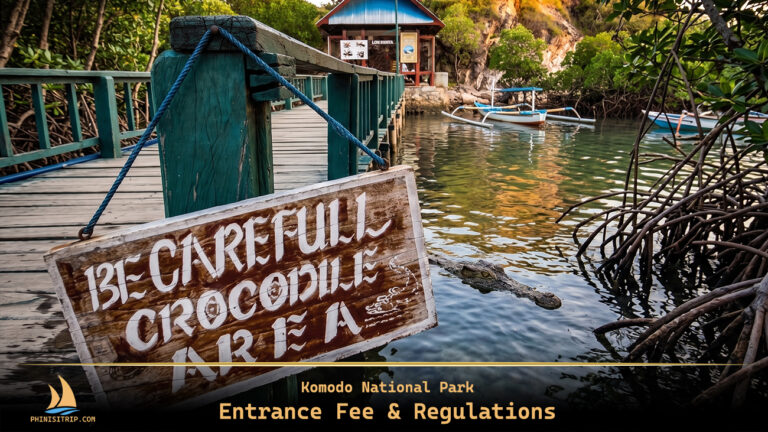
Komodo Island is home to approximately 1,700 Komodo dragons, the world’s largest living lizard. These animals are the primary reason the national park exists and the primary reason most visitors make the journey. Rangers from the Komodo National Park authority lead guided treks on both Komodo Island and Rinca Island, giving you controlled but genuinely close encounters with animals that can exceed three meters in length.
A Phinisi allows you to arrive at Komodo Island before the day-trippers from Labuan Bajo. If a dedicated Komodo Island boat tour is your primary goal, early arrival at the park is one of the strongest practical advantages of sailing from Lombok. Early morning trekking with fewer groups on the trails means quieter encounters and better photography conditions.
Pink Beach and Remote Snorkeling Spots
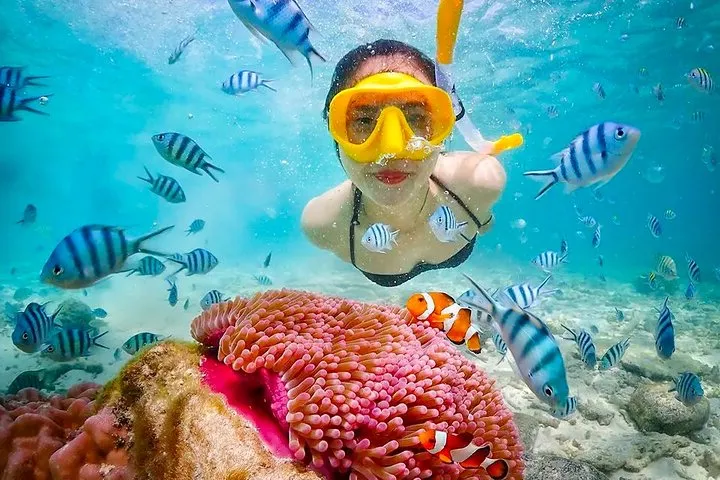
Pink Beach, known locally as Pantai Merah, is one of only seven pink-sand beaches in the world. The color comes from fragments of red coral mixed into the white sand, creating a blush tone that becomes more vivid in direct sunlight.
From a Phinisi anchored offshore, you can access Pink Beach directly by dinghy before the tourist rush begins. The snorkeling just off the beach is equally spectacular: hard and soft coral gardens, reef sharks, hawksbill turtles, and dense schools of tropical fish inhabit the shallow water. The Phinisi crew knows the best anchor points and will position the boat to give you access to sections of reef that day-trip operators rarely reach.
Padar Island Sunrise from the Sea
Padar Island has become one of the most photographed viewpoints in Indonesia. The three-horned ridgeline, with bays of different sand colors curving between each peak, is a genuine natural spectacle. But the standard tourist experience involves arriving at mid-morning with dozens of other hikers already on the trail.
A Phinisi boat allows you to anchor in Padar’s bay overnight, hike the ridge before dawn, and watch the sun rise over the Komodo Strait with the boat below you and nobody else on the summit. That is the version of Padar Island worth traveling for.
Night Sailing and Starry Skies
This is the highlight that surprises most first-time Phinisi travelers. The waters between Lombok and Komodo Island sit far from major light-polluting cities. On clear nights at anchor, the Milky Way is fully visible. On nights when you are under sail between islands, the bioluminescent plankton lights the wake with blue-green fire.
No speedboat or day-trip itinerary can give you this. It only happens when you are sleeping on the water, far from shore, for multiple nights.
Lombok to Komodo Island Sailing Route Explained
Typical 4D3N and 5D4N Sailing Itineraries
The most popular format for first-timers is the 3-day 2-night Komodo tour package run as a shared trip from Labuan Bajo. Departing from Lombok instead adds one to two days of genuine sailing and opens the longer routes below.
4 Days / 3 Nights (Fast Route)
- Day 1: Depart Lombok (Teluk Nare or Bangsal Harbor). Sail east, overnight passage toward Sumbawa or Satonda Island.
- Day 2: Morning at Satonda Island crater lake or Moyo Island, afternoon sail toward Komodo National Park.
- Day 3: Rinca Island Komodo dragon trek, Pink Beach snorkeling, overnight at Komodo Island anchorage.
- Day 4: Padar Island sunrise hike, final snorkeling stop, transfer to Labuan Bajo or return sailing.
5 Days / 4 Nights (Recommended Route)
- Day 1: Depart Lombok. Snorkeling stop at Gili Banta or Gili Lawang. Overnight at sea.
- Day 2: Satonda Island (volcanic crater lake). Sail toward Sape Strait.
- Day 3: Komodo Island dragon trek. Pink Beach. Overnight in park waters.
- Day 4: Padar Island sunrise. Manta Point snorkeling or diving. Afternoon at leisure.
- Day 5: Final swim stop. Arrive Labuan Bajo for flight connection.
Islands and Stops Along the Way
The full Lombok-to-Komodo route passes some of Indonesia’s least-visited islands. Satonda Island, a protected nature reserve around a crater lake that fills with brackish water, is rarely seen by tourists despite being one of the most unusual geological formations in Nusa Tenggara. Moyo Island, a game reserve north of Sumbawa, offers pristine jungle waterfalls that empty directly onto the beach. Gili Banta and Gili Lawang provide world-class snorkeling in near-total solitude.
These are not consolation prizes on the way to Komodo. They are destinations in their own right that happen to sit along the Phinisi route.
Best Time of Year for This Route
The optimal window for a Lombok-to-Komodo Phinisi trip runs from April through October. This is the dry season across Eastern Indonesia, bringing calm seas, lower humidity, and consistent southeast winds that a Phinisi can use efficiently. Water visibility for snorkeling and diving peaks between June and September.
Manta rays are reliably present at Manta Point near Komodo from October through March, overlapping with the early part of the wet season. Experienced Phinisi captains can manage November and December departures from Lombok, but passage conditions require more careful timing.
Who Is This Phinisi Trip from Lombok Perfect For?
Couples and Honeymoon Travelers
A private Phinisi charter from Lombok is genuinely one of the most romantic trip formats available anywhere in Southeast Asia. Private cabins, candlelit dinners on the open deck, isolated anchorages, and a crew dedicated entirely to your experience create something that no hotel honeymoon package can match. Many couples book a Phinisi specifically because they want their Indonesian honeymoon to be memorable in an active, experiential way rather than a passive resort stay.
Small Private Groups
Phinisi boats built for tourism typically accommodate between eight and fourteen passengers. For a group of four to twelve people traveling together, a private charter gives you the entire boat, the entire crew, and full control of the itinerary. You set the pace, choose your stops, and eat what you want. There are no strangers sharing your cabin corridor or competing for the best deck chair.
Adventure Seekers and Ocean Lovers
If you dive, snorkel, freedive, kayak, or simply spend most of your holiday in or on the water, the Lombok-to-Komodo Phinisi route delivers consistently. The Komodo National Park is one of the top five diving destinations on earth, with strong currents pushing nutrients into seamount environments that support extraordinary marine biodiversity. The passage from Lombok to Komodo passes through at least four distinct marine ecosystems. You will not run out of water to explore.
Travelers Avoiding Mass Tourism
If you have ever arrived at a beautiful natural site and been disappointed by the crowd of people in matching hats following a guide with a flag, you already understand why the Phinisi route from Lombok exists. The early arrival advantage, the private access to anchorages, and the simple fact that fewer operators run this corridor all translate directly into a quieter, more personal experience of Komodo Island and the surrounding park.
Phinisi vs Speedboat vs Liveaboard: What’s the Difference?
Travelers researching Komodo trips will encounter three main vessel categories. A broad overview of boat trip options to Komodo shows a spectrum ranging from budget speedboats to fully crewed Phinisi charters. The differences between them are significant and worth understanding clearly before booking.
| Category | Phinisi Boat | Speedboat | Modern Liveaboard |
|---|---|---|---|
| Passenger experience | Private, immersive, slow travel | Group day-trip, high turnover | Dive-focused, structured schedule |
| Comfort at sea | High (stable hull, spacious decks) | Low (rough in swells, loud) | Medium to high |
| Itinerary flexibility | Full (private charter) | None (fixed route) | Low to medium |
| Cultural experience | Very high (traditional vessel) | None | Low |
| Access to remote spots | High (shallow draft options) | Medium (speed only) | Medium |
| Best for | Couples, private groups, explorers | Budget day-trippers | Dedicated divers |
| Duration | 3 to 7 nights typical | 1 day | 5 to 10 nights typical |
The speedboat is appropriate only if your time is extremely limited and Komodo is a single checkbox on a longer itinerary. Travelers who want to base themselves in Flores can also find Phinisi options departing from Labuan Bajo, though the route lacks the journey depth of a Lombok departure. A modern liveaboard suits committed divers with structured dive schedules as the primary goal. The Phinisi is the right choice for almost everyone else who wants to genuinely understand what Komodo Island and the surrounding waters are.
Is a Phinisi Trip from Lombok Worth It?
This depends entirely on what you want from a trip. If you are counting activities per dollar and optimizing for the lowest cost per attraction visited, a Phinisi is not your tool. But if you are asking whether the experience justifies the investment compared to alternative travel options at a similar price point, the answer for most travelers is yes, clearly.
Consider what you are actually buying:
Multiple nights sleeping on the Indian Ocean. Private access to some of the most biodiverse reefs on the planet. Komodo dragons encountered before the crowds arrive. A traditional Indonesian sailing vessel as your home. A crew that handles everything. Sunrises over Padar Island with nobody else on the summit.
That is not a checklist of activities. That is a category of experience that simply does not exist in a hotel room or on a day-trip boat.
The travelers who report the most regret are those who visited Komodo Island on a day-trip speedboat from Labuan Bajo and later learned what a komodo trip from lombok on a Phinisi would have cost by comparison. The price gap is smaller than most people expect. The experience gap is enormous.
How to Book the Best Phinisi Trip from Lombok to Komodo Island
What to Look for in a Trusted Operator
The Phinisi charter market is unregulated in many respects. The quality difference between operators is significant. Look for these indicators when evaluating a booking:
- Verified Komodo National Park entry permits included in the package
- Licensed and experienced captain with documented open-water passages
- Clear safety equipment manifest (life jackets, emergency radio, flares)
- Transparent menu and dietary accommodation options
- Recent guest reviews on independent platforms, not only the operator’s own site
- Snorkeling and diving equipment included or clearly specified as additional
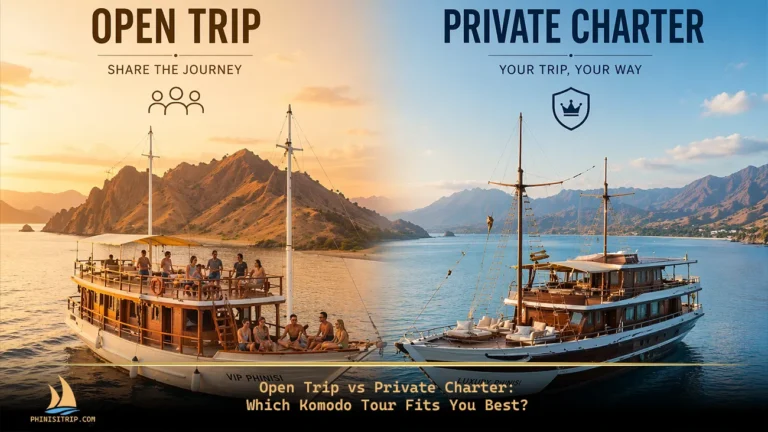
Private Charter vs Shared Trip
Most Phinisi operators offer both formats. A shared trip places your group with strangers to fill the boat’s capacity, reducing your per-person cost significantly. A private charter means the boat and crew are entirely yours. For couples and groups who already know each other, private charter is almost always worth the premium because itinerary control and social comfort are both dramatically better.
For solo travelers or pairs on a tighter budget, a shared trip on a well-reviewed operator is a reasonable option. Vet the operator carefully and confirm the maximum passenger count before booking.
Ready to Sail from Lombok to Komodo Island?
The Lombok-to-Komodo Phinisi route is one of the last truly exceptional sailing journeys in Southeast Asia that has not yet been overrun. The window to experience it with the intimacy and freedom it deserves is still open.
Book your Phinisi charter while that is still the case.